Two Year Update

This perpetual calendar has been hibernating for several years, stuck in that netherworld between ideation and the huge amount of work that will need to occur to bring it to life. In order to get something to happen, I’ve scaled back my short term ambition- the plan now is to make something clock sized (rather than watch sized), that will be easy to prototype and debug.

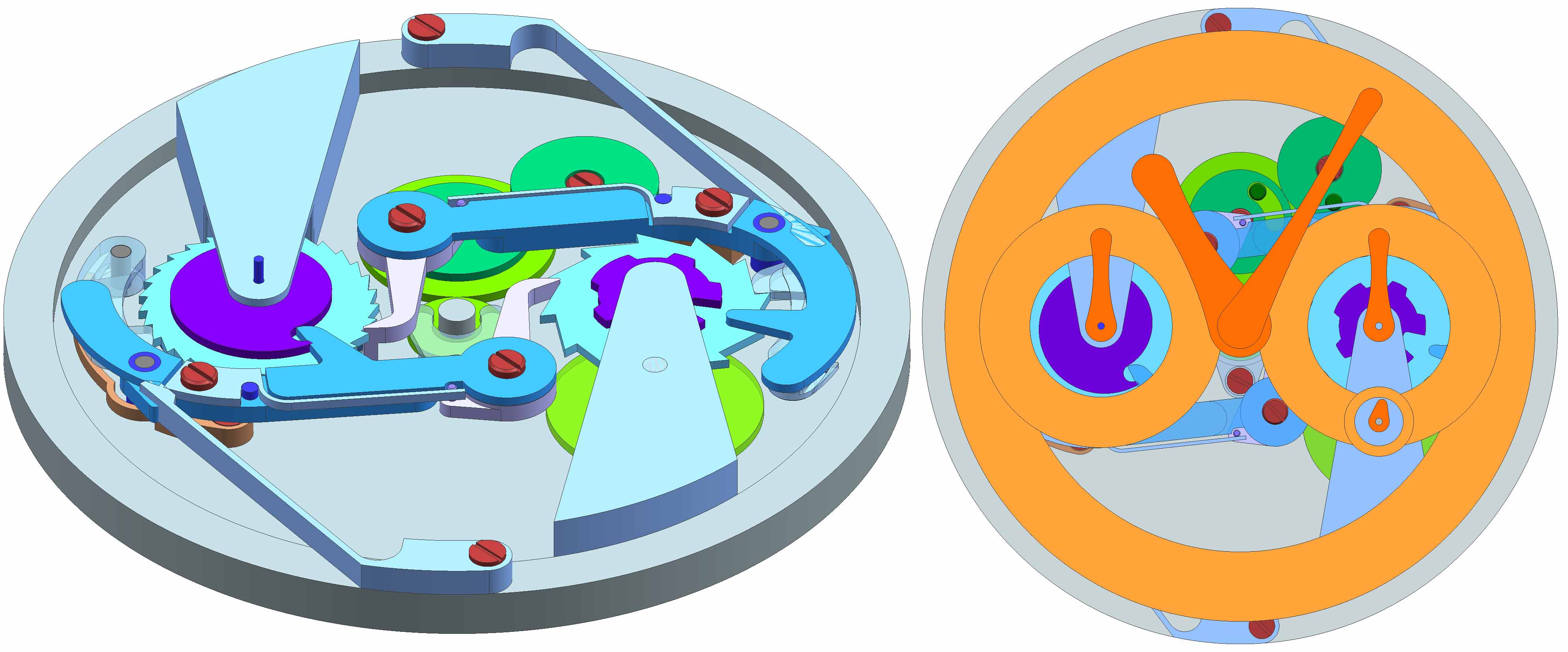
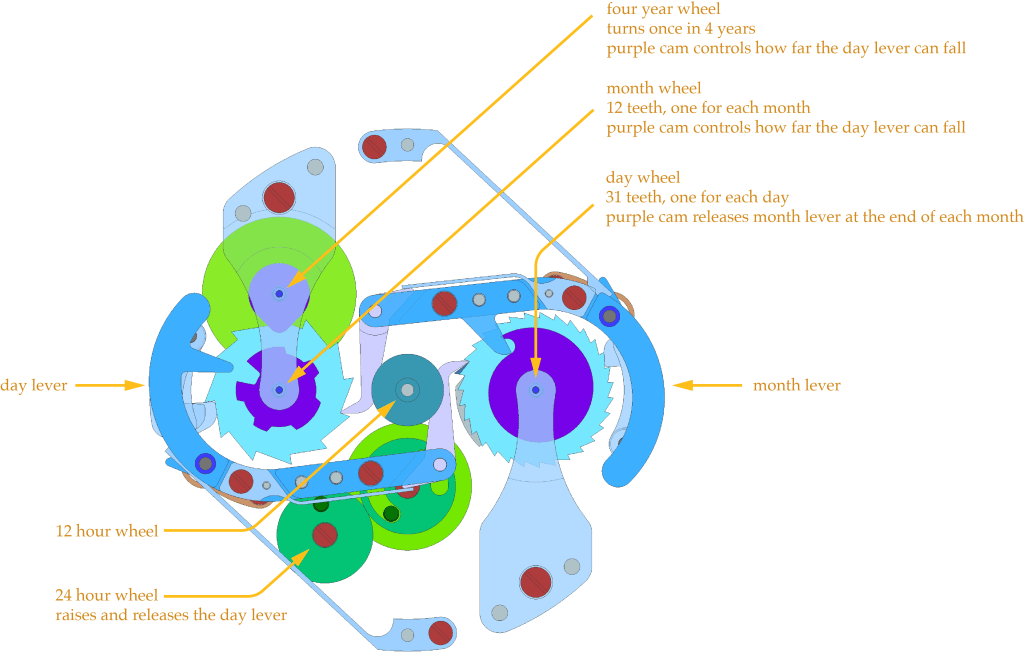
Here’s a diagram that labels the main components. At a high level, the day lever advances the day wheel (once every day), and then the month lever advances the month wheel (once every month).

Date Adjustment?

After much reflection, I’ve realized it’ll be simplest to have no manual adjustment mechanism.  Adjustment will be accomplished by unscrewing the front bezel and toggling the month and day levers directly with a poker.  The irony of insisting on simplicity in a perpetual calendar watch is not lost on me.  But really, it makes sense: I’m aiming for the cleanest, simplest mechanism which will show the correct day and date until 2100.  (The mechanism will require a correction then because it ignores that the Gregorian Calendar skips February 29 on years divisible by 100 but not those divisible by 400.)  In the spirit of simplicity, there will be no seconds display, nor will there be any display for the day of the week.

Forgoing a manual adjustment mechanism means that the broad strokes of the design are done. The next step is to release parts at 5x scale to a 3D printer.  This is a cheap way to validate the kinematics, and enable corrections and refinement before the substantial effort of making parts at scale.  Here’s the current mechanism:
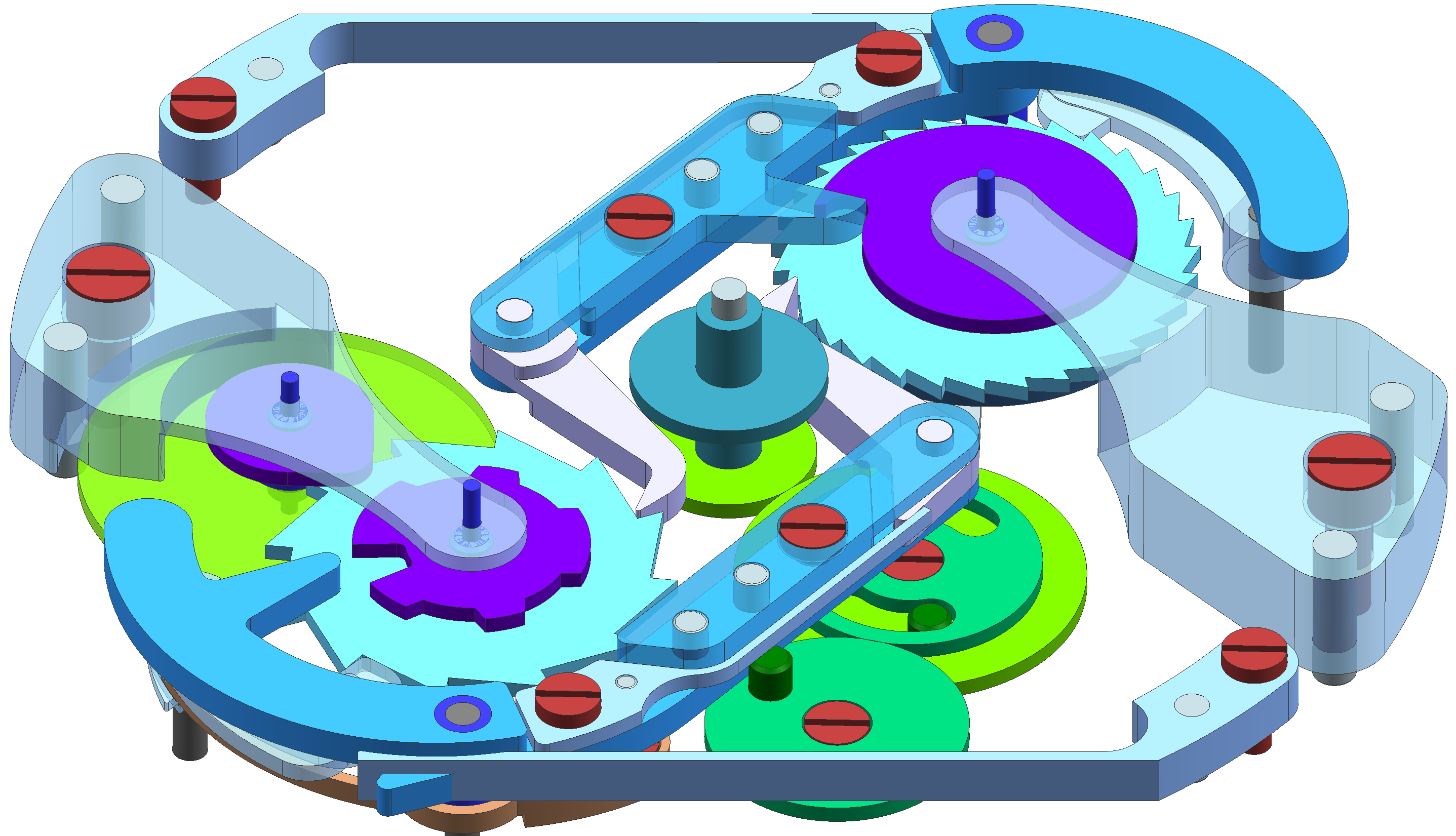
fig09

I’ve decided to use a basic Seagull movement ($40 time only) as the foundation for the calendar work.  If the biggest problems with Seagull movements are that parts sometimes have burrs and that the movements come without oil, I think I’ll be fine.  More than anything else, the foundation movement needs to be simple and hearty, and easy to purchase.

s-l500

machinery as art

The purpose of this whole endeavor is to make something beautiful- machinery as art.  I reflected on this after seeing the following painting earlier today at the de Young Museum in San Francisco.  Watch, 1925 by Gerald Murphy.

IMG_8110

This is a large oil on canvas, about 5 feet square.  It’s a striking piece that everyone stopped to consider.  I would describe it as machinery in art, rather than as art.

Machinery in art is where you paint a picture of a watch.  Machinery as art is where you build a watch.

The placard next to the painting said the watch “features a broken mainspring”.  If anyone sees a broken mainspring in this painting, please let me know.  I see questionable gears and something inspired by a cylinder escape wheel, however there isn’t any mainspring that I can see, broken or otherwise.

Seagull Interlude

I worked for Apple for many years, and I spent a lot of time in China.  I have to say, there’s nothing quite as exciting as running around a factory trying to get something to happen where no one speaks any English, and no one knows where the screwdrivers are.  The engineering problems that need solving are usually tangible and immediate, and with pigeon Mandarin and a sketchbook you can accomplish just about anything.

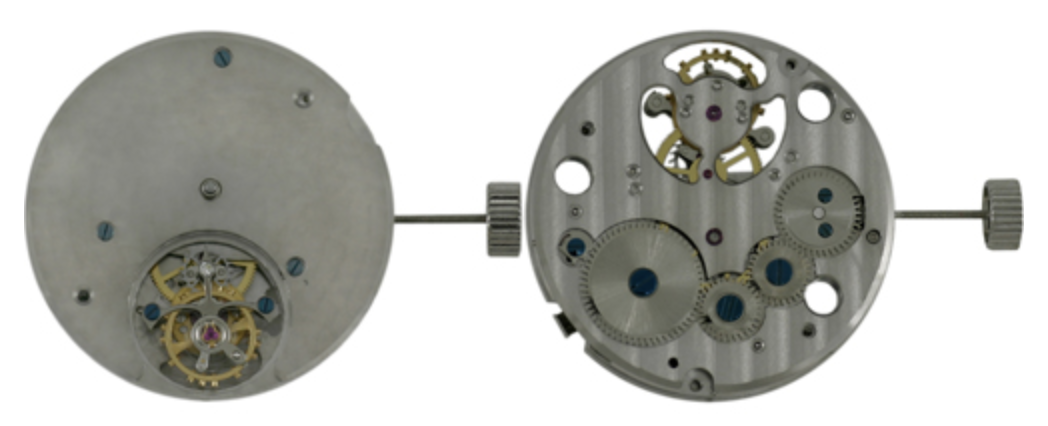
Of course there are big watch factories in China, however it never occurred to me to visit them.  It would have been so easy!  The Seagull Watch Group has been around since 1955, and operates a huge factory in Tianjin, just outside Beijing.  The Seagull Watch Group manufactures literally every kind of watch movement under the sun.  As an example, here is a bare tourbillon movement (ST80 Series > 8007).

Screen Shot 2018-05-11 at 8.51.18 PM

I’ve inquired about costs and minimum purchase orders.  Hopefully they’re friendly!

Design Refinement 03

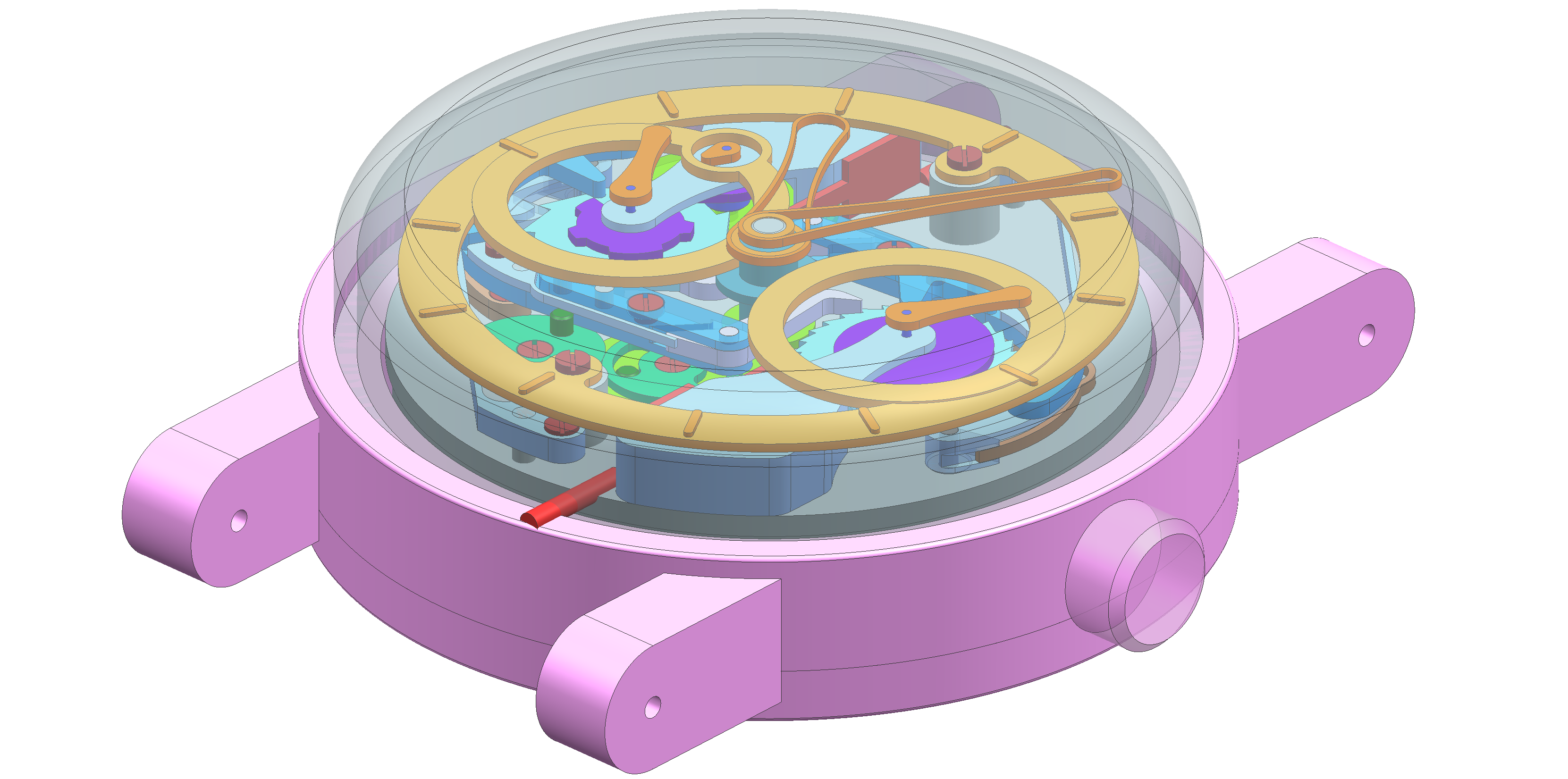
I’ve spent some time roughing out the case and dial. I’ve been worried about the thickness of the calendar mechanism, however I think the whole thing actually looks pretty good nestled within a deep crystal.  This elevates the mechanism, giving it dimensionality.  It’s almost like a miniature orrery on top of the watch!

fig07

There’s a lot of stuff online about grinding sapphire.  There’s also a lot about working with polycarbonate and acrylic, and applying (automotive) hard coats to resist scratches.

The case, dial, and hands will undergo countless iterations sometime later.  For now I only need to be in the ballpark, so that I can finish designing the mechanism.  There’s still a lot to do before I rapid prototype the whole thing at 4x scale.

fig08

At the moment, I’m working out the day and month adjustment mechanisms (shown above in red).  A user has to be able to press these pins with a paper clip to set the date.  The mechanisms need to advance the ratchet wheels by one click, and then spring back into place.

Design Refinement 02

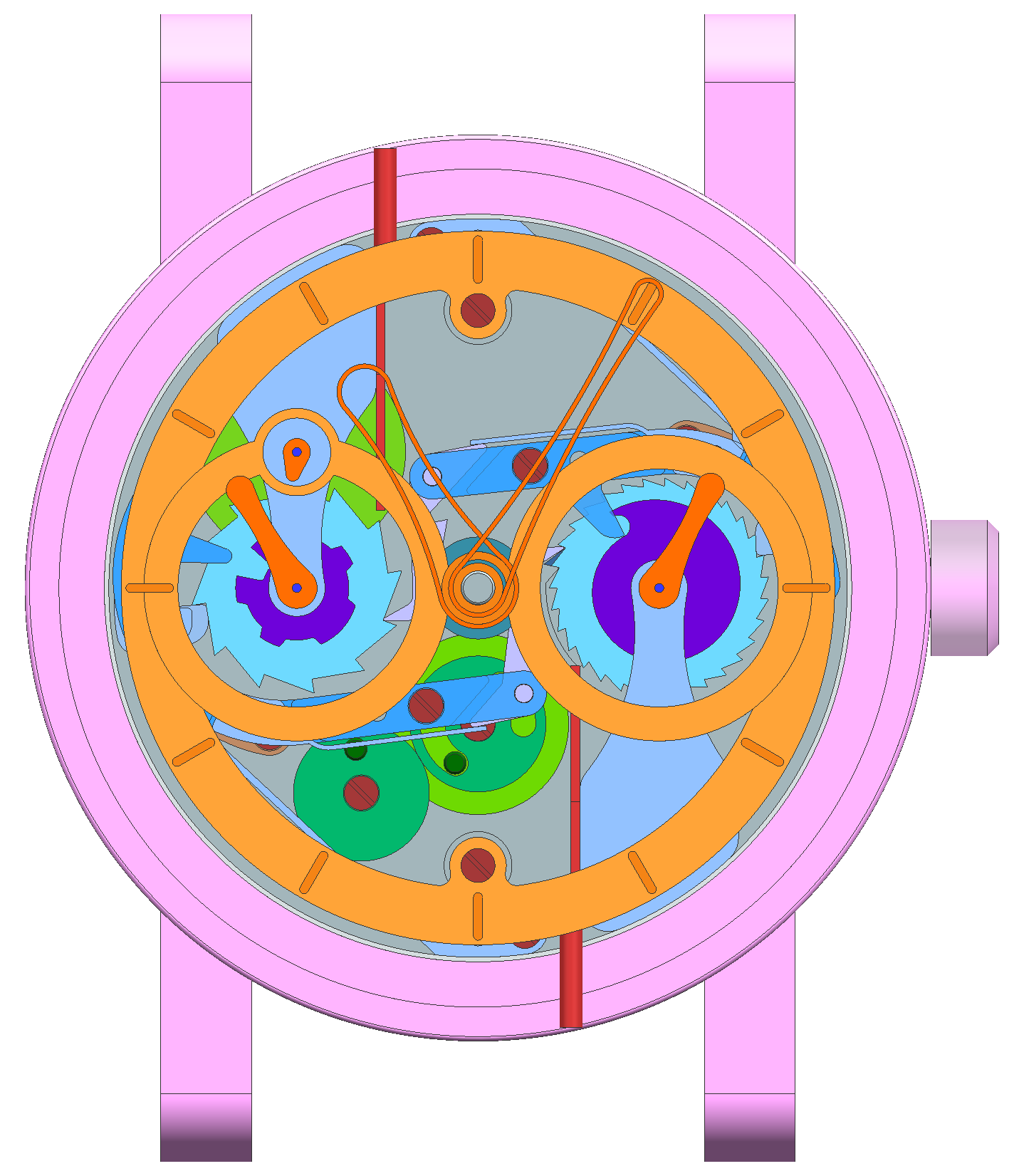
Several steps forward, and several steps backward.  Bridges feel way better than posts, and finally I’ve worked out a shape for the two main lever springs.

twoImages

I’m looking for a different way to anchor the two pawls- a screw centered in a disk just feels low quality.  Maybe because it suggests the rotor on a cheap automatic watch?

The point of this project is to celebrate the perpetual calendar mechanism.  It’s got to be visible, so the dial shown above won’t do.  I’ll keep experimenting till I get it right… One thing I know is that I love those tear drop hands!

Design Refinement

The design has transitioned from sketch book to CAD.  I’m trying to keep everything balanced and bulky, so that I’ll be able to make all these small parts (the cams and gears in the following screenshot are each 0.4mm thick, and the watch diameter is 36mm).

fig_02

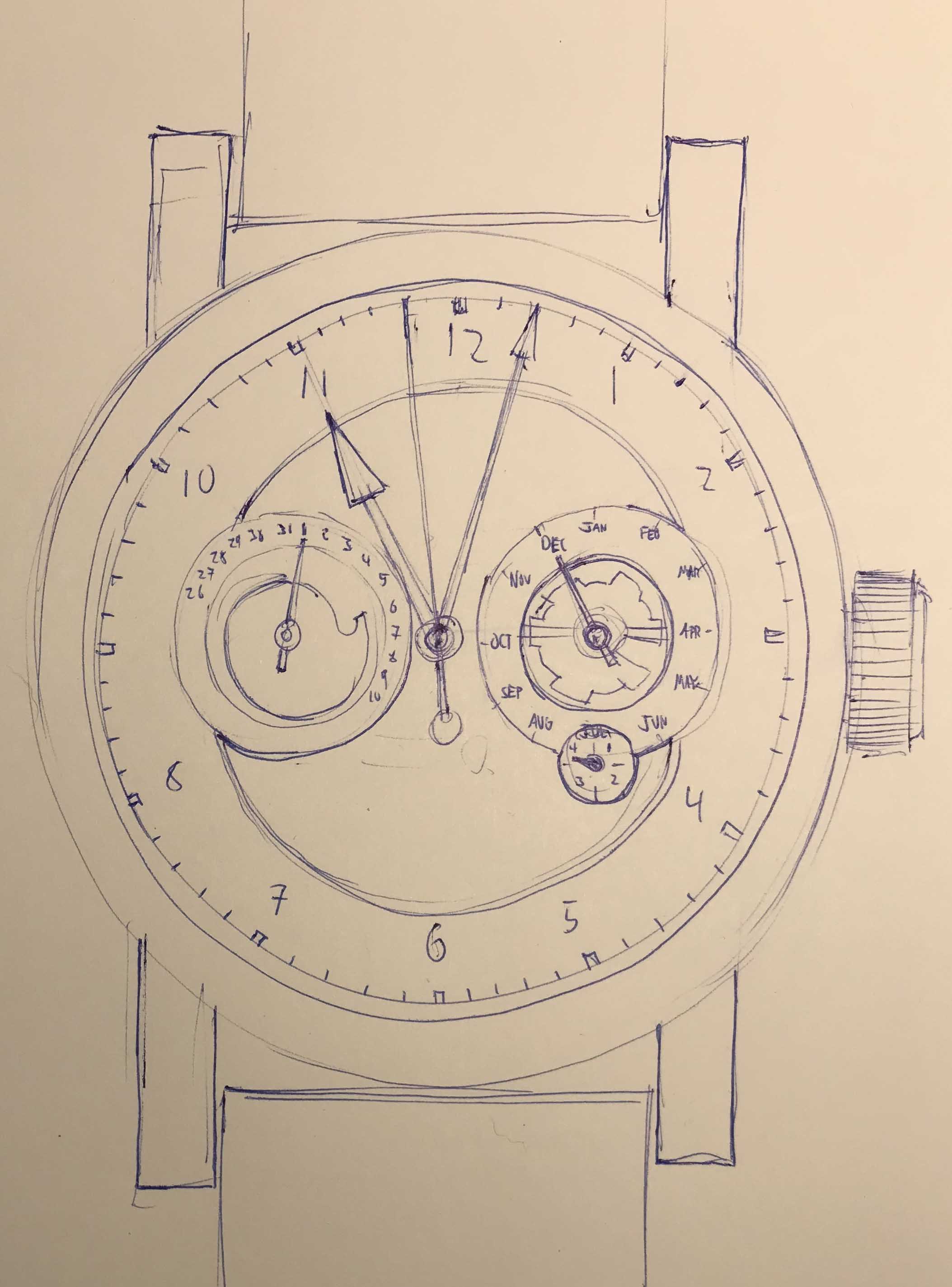
There’s still a lot of detail work to do, however I feel like it’s coming together!  I’m even starting to wonder about the hands and dial.  Maybe something like this:

IMG_8076

To skeletonize the dial or not, that is the question.  Another question is whether to have center seconds, or seconds at six o’clock.

Design Process

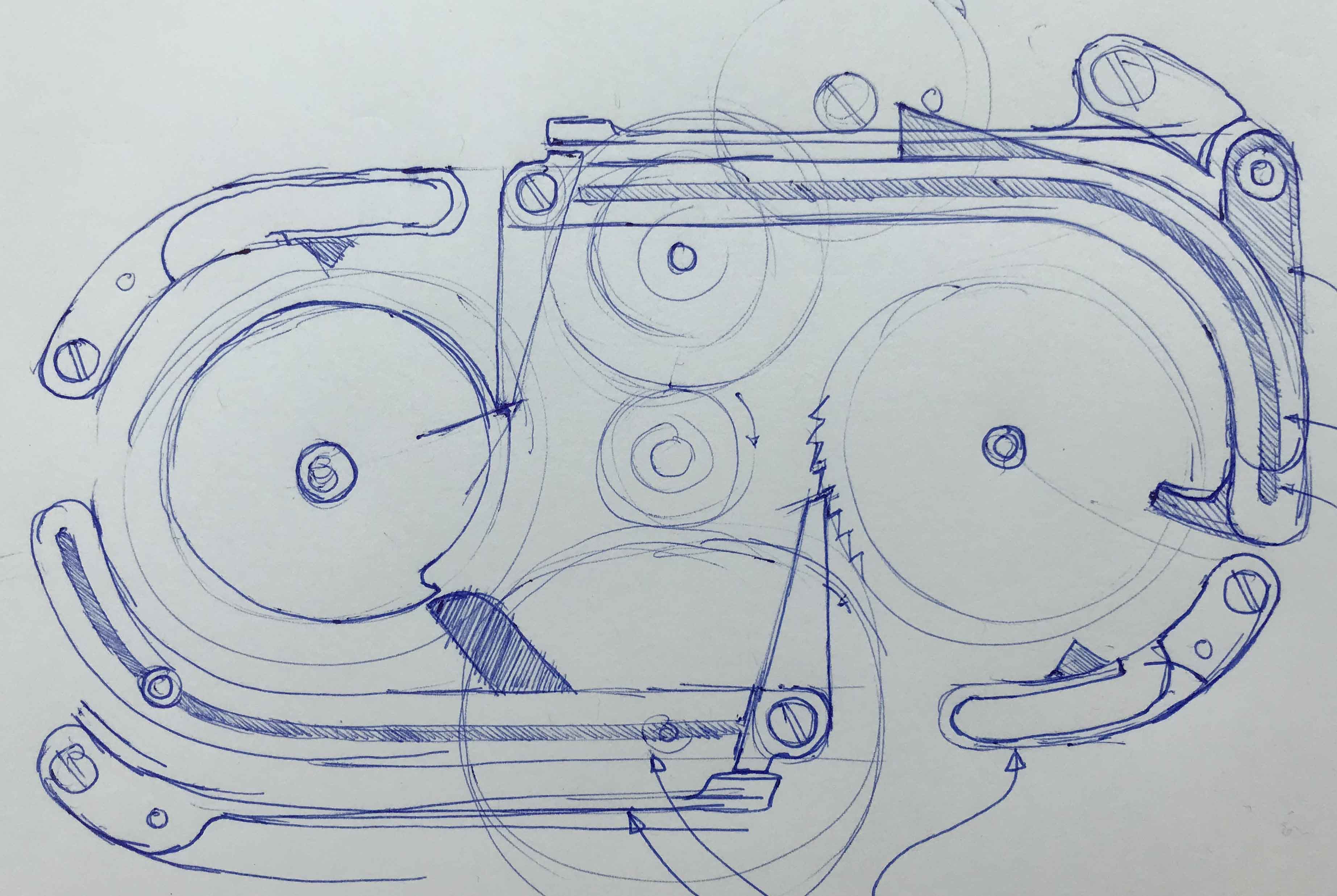
The mechanism needs to be beautiful and symmetric, with consistent curves and thicknesses making everything appear to be “cut from the same cloth”.  This begins with lots and lots of sketches.

layout02

This is all very rough, but I think it’s headed the right direction.  The gears for months and days of the month are the same distance from the center, and the same diameter.  The pivot points of the two main levers and the detent levers form a perfect rectangle.  The springs for these levers are nice and symmetric, etc.  Lots of additional sketches (and computations) will be needed to refine all this.  It’ll soon make sense to move the design work into CAD.

Past Work

Although I tend to design and build things frequently (I’m a mechanical engineer), it’s been years since I worked on anything legitimately horological.  The following projects are from a long time ago (pre 1997), all done without any CAD or CNC.

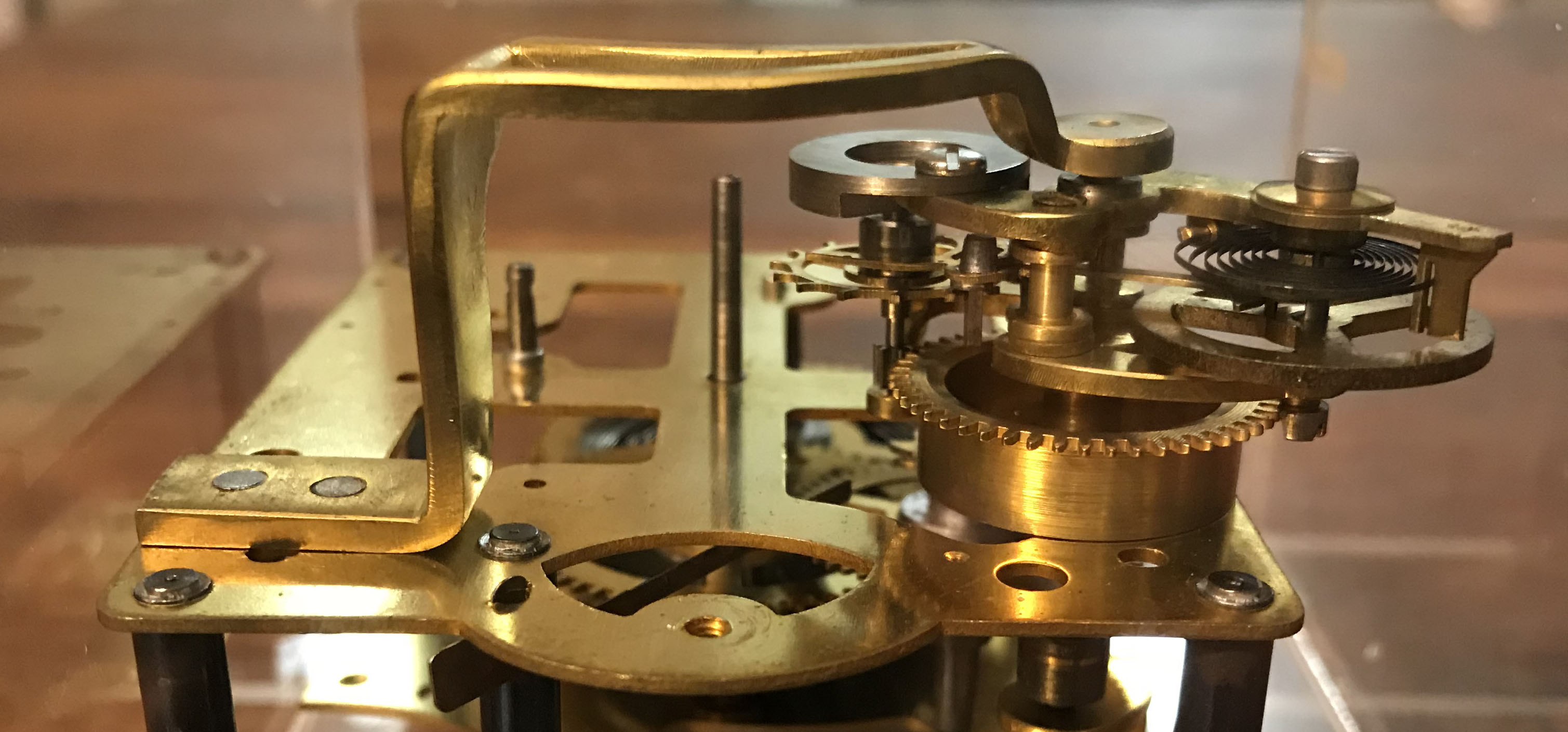
Tourbillon, built sometime when I was in high school, out of parts from an old Westclox alarm clock.  Still runs great.

tourbillon

My first perpetual calendar- clunky but functional.

IMG_8074

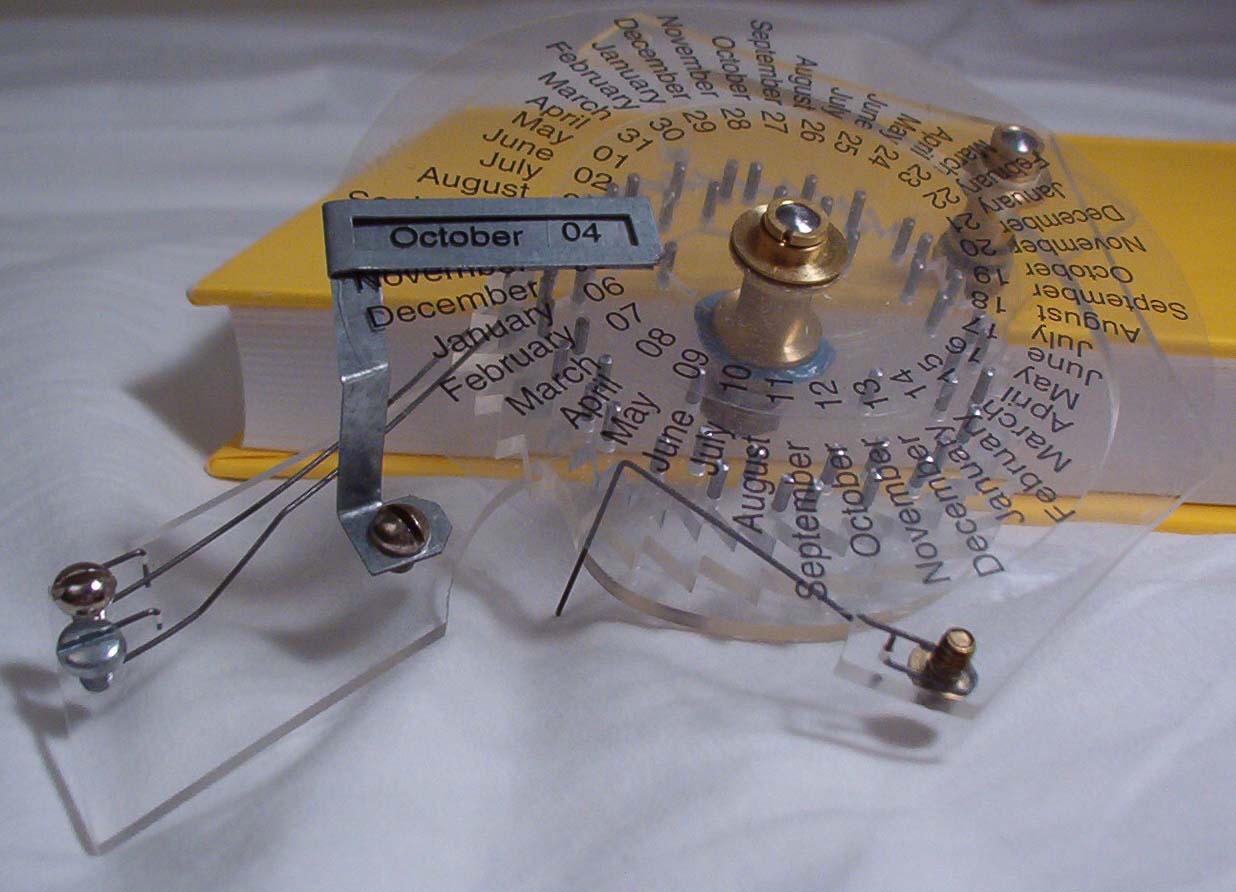
My second perpetual calendar incorporated all sorts of learnings from the first one.  The entire mechanism is driven by a single lever and pawl.  The pawl (i.e., bent piece of wire near the bottom of the photo) does several things at once:

  • drives the day wheel forward at least one tooth every 24 hrs.
  • drives the month wheel forward one tooth at the end of every month.
  • catches a single long tooth on the day wheel to advance it extra days at the end of a short month.

calendar2

The next image shows perpetual calendar work mounted into an oversized DOXA pocket watch.  History is everywhere- I recently learned that this particular watch was pilfered from a town in Germany by an American soldier during WWII!  This whole project was riddled with problems, and landed beyond my ability (at the time) to make small parts.  Some of the gears turned out okay, however the screws are massive because I couldn’t figure out how to tap small holes.  I tried to make my own small taps on a screw cutting lathe, however I didn’t heat treat them properly and they crumbled when I tried to use them.  This was in 1996, before I knew about the internet…  Thankfully I can now look all this stuff up, and learn how to do it right.

obliqueView

The Journey Begins

2018.04.21

In my new abundance of time (created by deleting FaceBook from my phone, and no longer spending my evenings reflexively scrolling through click bait), I have rediscovered a deep interest in horology.  I was obsessed with clocks and watches as a teenager- spending all my time thinking about mechanisms and watches I might build.  I delighted in tourbillons, carousels, chronographs, perpetual calendars, repeaters, clockwatches, and every type of exotic escapement.  My enthusiasm for clockwork diminished in my late teenage years however as I realized that these treasures are inevitably trinkets for the ultra wealthy, and that material items in general are destined for decay.  What is really everlasting is the domain of thought!  The construction of an idea can be just as demanding as the construction of a fine pocket watch, and ideas can move people.  The world of ideas seemed deeper and more profound than making trinkets, and I reveled in it, spending years doing graduate work in mathematics and mechanical engineering.  My convictions changed once again when I left academia- my attachment to theory melted into a realization that the world is ultimately physical, and that physical things are meaningful in spite of decay.

My resolution now is to build a perpetual calendar wrist watch.  It’ll be a progression, from sketches and CAD to rapid prototype parts printed at 5x scale (to iterate and work out the geometry), down to the final parts, fabricated in brass and steel, and with attention paid to the polish of every facet.  The point of this is to create something beautiful, and to document techniques learned and discovered along the way.  What is the best way to make a 0.5mm diameter screw?  How can one achieve a mirror polish finish on a small spring?  Exactly how should one heat treat steel before finishing?  My goal is to document everything so that this blog becomes a resource for future endeavors.  If this works out, then the sky is the limit- I may attempt a limited production run of 20 perpetual calendar wrist watches, or I may try to build myself a tourbillon!